
The world is changing at an unprecedented pace, and so is the workforce required to cater to its
needs. It is mostly driven by technological advancement, which is evolving according to the
global priorities. The World Economic Forum’s Future of Jobs report 2025 tries to capture the
changing demands of the work industry. The report forecasts the employment and skill trends up
to the end of this decade.
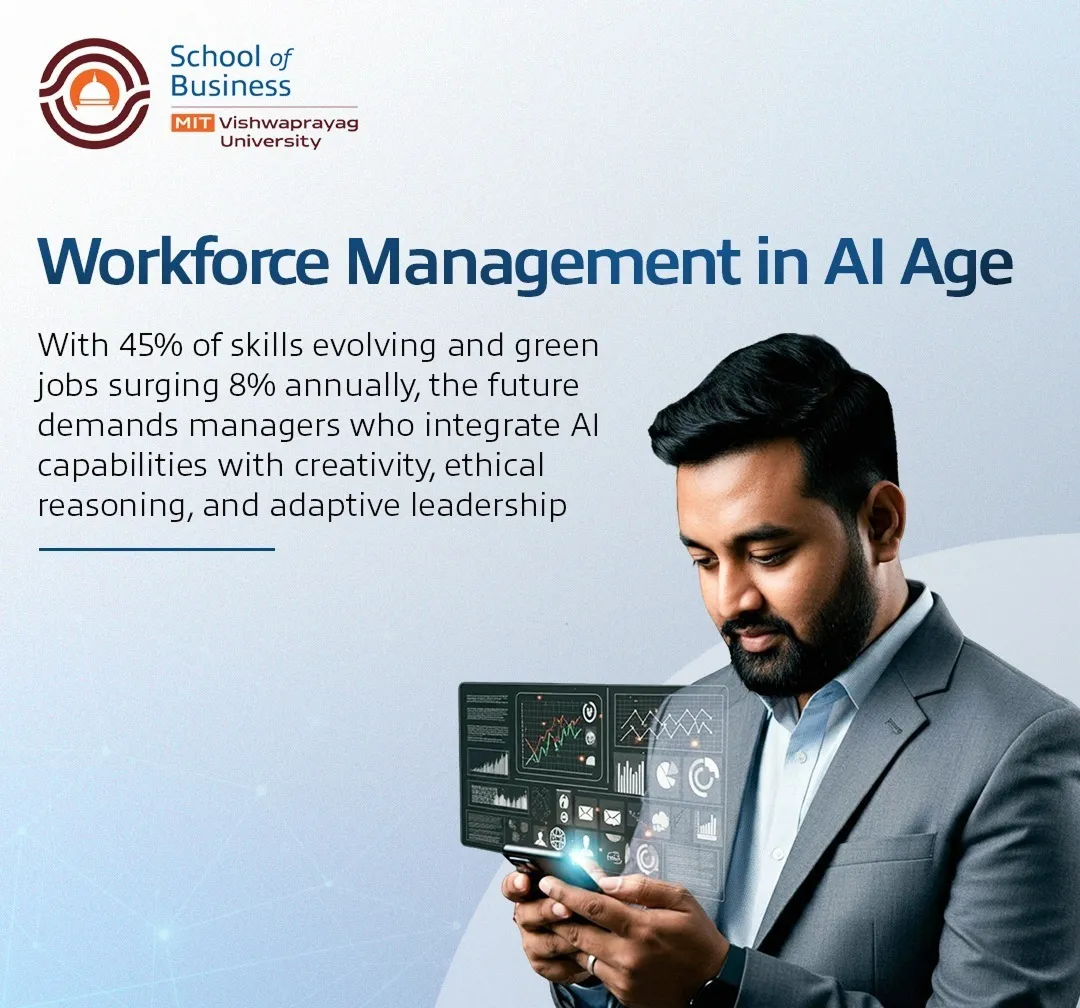
The most striking findings of the report include that around 45% of the core workers’ skills are
expected to change mostly due to the advancement of Artificial Intelligence, automation and the
transition of the economies towards sustainability and green energy. This has resulted in job
skills which will become outdated. The report is more of an optimistic view, estimating that
there would be the creation of around a billion new jobs, exceeding the job roles which are
likely to be displaced.
For future job roles, the message remains clear: the success of an individual depends on the
ability of the individual to combine the skills according to the technological capabilities,
with emphasis on critical thinking, leadership and creativity.
Key Skills: Where Technology Meets Human Capability
The report highlights the shift in the skills possessed by the employers, analytical thinking
topping the list, followed by creativity, active learning and problem solving. The adaptation of
technological advancement in data and cybersecurity continues to grow in importance. The soft
skills like resilience, leadership, and social empathy are the key notable skills to navigate
the ambiguity, building collaboration and ethical innovation.
The future of MBA and BBA is regarded with enhancing the existing skills with emphasis on
functional knowledge and integrating the soft skills with immersive and applied learning. Using
knowledge through case studies which use real-time data, will help to analyse the volatile
markets. The technological labs, which encourage ideation and experimentation, are a basic
necessity to upgrade the skills. There would also be the need for capstone projects, which will
give the students first-hand experience in learning and adapting to the challenges posed by the
climate and technological change.
Technology as an Enabler
WEF has emphasised that technological progress will reshape jobs rather than eliminate them.
However, automation reduces the administrative and clerical work but simultaneously increases
the demand for jobs which require the tools to make informed decisions. It is predicted that by
2029, technological skills will be embedded in nearly 60% of all jobs, yet it is stated that
strategy and policy roles will remain in human responsibilities.
Management education, therefore, focuses on developing technological advancements rather than
converting them into programmers. This includes the collaboration of students with technical
experts, translating raw data into data insights and then into strategic actions and designing
to innovate digital business models.
Ethics, Sustainability, and Inclusive Growth
Green jobs are projected to grow by more than 8% annually, making the climate-related skills
increasingly critical. The skills to balance profitability with environmental responsibility and
local sustainability are crucial.
As Data is the oil of this century, ethical decisions around AI and data privacy have become
central as businesses are facing increased scrutiny from regulators and investors. The future
belongs to individuals who can integrate ethical reasoning into everyday business decisions.
Learning for Life in a Dynamic Economy
Future of Jobs report highlights the rise of lifelong learning, companies and industries have to
retrain more than 50% of their workforces, making adaptability, continuous upskilling and
learning agility a soft skill. The universities have to emphasise skills over a credential
system, which is largely supported by modular learning, applied projects and professional
engagement.
Preparing Future-Ready Managers
Recognising these global shifts, the School of Business at MIT Vishwaprayag University has
designed its MBA and BBA programs to develop analytical, technology-enabled and socially
responsible future-ready managers.
Dr. Sanjay V. Hanji
Associate Professor |
School of Business |
MIT Vishwaprayag University, Solapur, Maharashtra, India